
Visual Aids, Real Results: What Caregivers Can Do Between Sessions
At LIGHT Child Development Centre, we believe that real progress doesn’t just happen during therapy — it starts at home, in the small everyday moments you share with your child.
While therapies and professional support play an important role, one simple truth remains: your child spends most of their time at home — with you. That’s why we work with caregivers to transform daily routines into powerful opportunities for learning, connection, and growth.
This blog is a gentle guide for parents, grandparents, and caregivers of children with developmental delays — offering practical ways to use visual aids meaningfully in daily life between sessions.
Why Visual Aids Are So Effective
Children with developmental delays may process information differently — needing extra time, repetition, or non-verbal forms of communication. Visual aids like picture cards, illustrated schedules, or charts offer them the structure and clarity they need.
These tools can help your child:
- Understand daily routines
- Express needs without frustration
- Transition between tasks smoothly
- Learn step-by-step processes confidently
Visual supports are powerful tools in therapy rooms — but their true impact grows when extended into daily home environments.
Home: Where the Real Practice Happens
Your home isn’t just where your child feels safest — it’s also where most meaningful learning takes place. Whether your child attends therapy, sees a developmental pediatrician, or goes to a special school — what you do at home reinforces everything they learn outside.
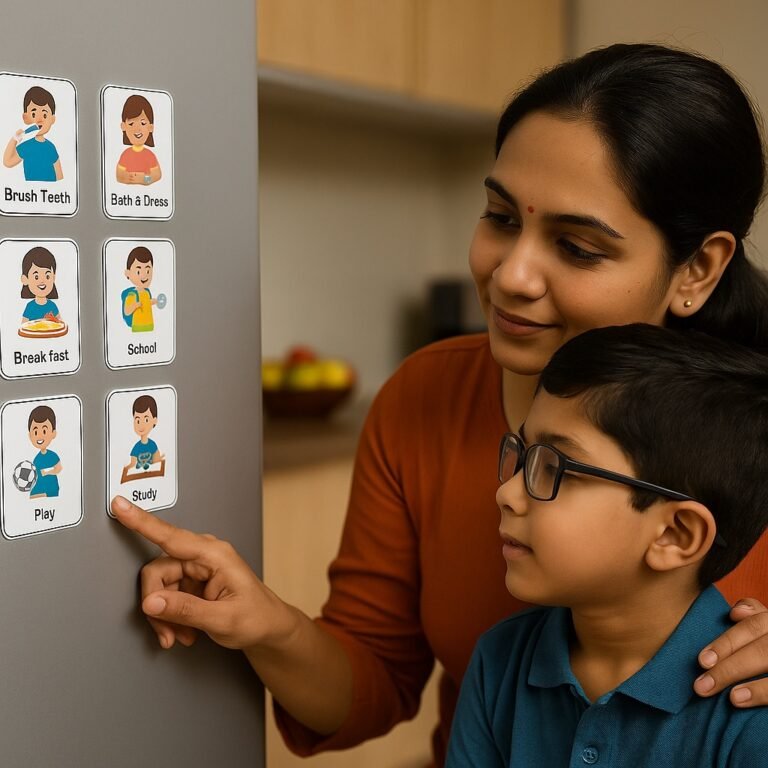
Even a simple picture chart on the refrigerator can:
✅ Reduce stress during transitions
✅ Improve communication
✅ Help your child feel seen, safe, and supported
You don’t need expensive tools or specialized training — just patience, creativity, and a desire to help your child thrive.
Easy Ways to Use Visual Aids at Home
Here are simple, effective visual tools you can start using today:
- Step-by-Step Task Boards
Break complex actions (like brushing hair or getting dressed) into pictures. - Timers and Visual Clocks
Show how long an activity lasts (e.g., “5 more minutes of play time”). - Emotion Cards
Let children point to how they feel — happy, tired, angry, or overwhelmed. - Choice Boards
Offer options using pictures: “Do you want to read or color?” - First-Then Boards
Show clear sequences: “First dinner, then play.” - Picture Labels
Add images to boxes, shelves, and doors to build independence.
Whether you draw them, print them, or cut them from magazines — it’s not about perfection. It’s about consistency, clarity, and communication.